
System architects and developers may wonder whether adding a new feature or using data in a novel way would create privacy problems. User experience designers and researchers may want to know which privacy choices require user attention and how to understand users’ attitudes. Policy writers and implementers may want to figure out the best ways to protect citizens’ privacy. More broadly, any one of us may wish to reflect on what it means to have privacy in the digital age, when living without generating vast amounts of data is not an option. The theory of Contextual Integrity can aid in answering all of these questions.
This article aims to serve as an accessible introduction to Contextual Integrity for researchers, practitioners, and others who have not encountered it before.
To learn more, check out the full paper!
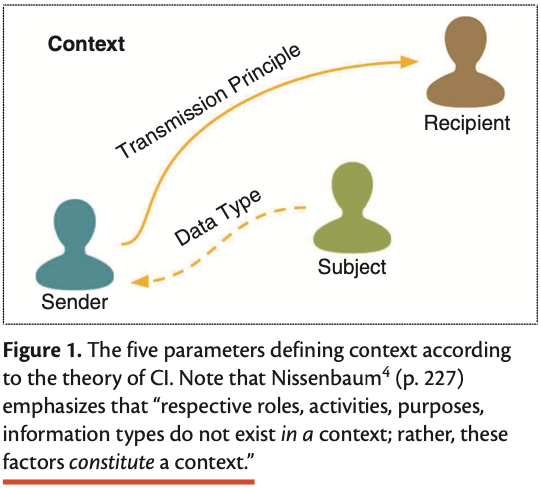
Malkin, Nathan. “Contextual Integrity, Explained: A More Usable Privacy Definition.” IEEE Security & Privacy 21, no. 1 (January 2023): 58–65. https://doi.org/10.1109/MSEC.2022.3201585.








 SPLICE
Leave a comment