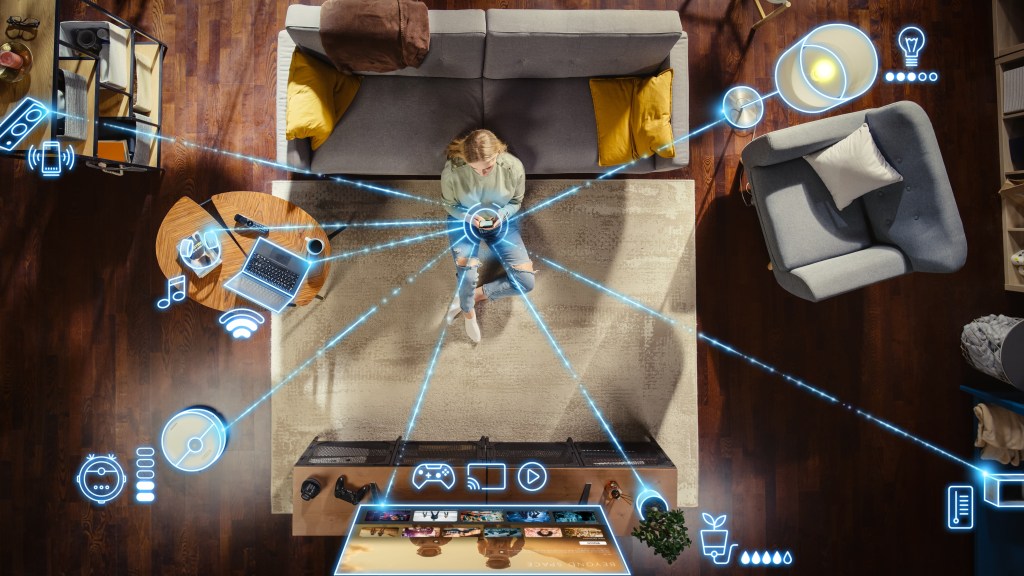
If your kitchen faucet is leaking, you might call your landlord if you are a renter, you might try fixing it yourself if you own the place and have some time and knowledge of how to fix the issue, or you might call your local handyperson to come out and fix it. If your smart thermostat suddenly stops working, would you call your landlord if you’re a renter? You might try fixing it yourself if it’s your own thermostat and you have the time and knowledge to troubleshoot the issue, and that might include a call to the manufacturer of that thermostat. But what if you have a home with 10 smart devices, 4 of which are malfunctioning, all from different manufacturers? Who can you call to help?
We highlight the need for a “HandyTech” — a technically skilled contractor who can set up, repair, debug, monitor, and troubleshoot home IoT systems. We consider the potential privacy challenges posed by the HandyTech, who must have access to home IoT devices and also to logs of previous actions. In understanding the privacy issues raised by HandyTech access, we also illuminate the privacy issues of all managers of home IoT systems.
Interested in learning more? Check out the paper here! You can find additional SPLICE publications on various smart-home security and privacy topics here.
Anthony, Denise, Carl A. Gunter, Weijia He, Mounib Khanafer, Susan Landau, Ravindra Mangar, and Nathan Reitinger. “The HandyTech’s Coming Between 1 and 4: Privacy Opportunities and Challenges for the IoT Handyperson.” In Proceedings of the 22nd Workshop on Privacy in the Electronic Society, 129–34. WPES ’23. New York, NY, USA: Association for Computing Machinery, 2023. https://doi.org/10.1145/3603216.3624956.







 SPLICE
Leave a comment